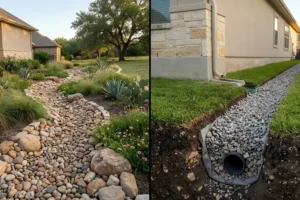
When a heavy Central Texas storm rolls through Austin, the shape of your yard decides where all that water goes. If the ground slopes toward your house, rain collects along the foundation, soaks flower beds and leaves soggy spots that never seem to dry. Proper grading is one of the most reliable yard drainage solutions in Austin, and it is often the first fix a drainage contractor looks at.
What Yard Grading Actually Means
Grading is the process of reshaping the soil so water flows away from your home and toward a safe outlet. A properly graded yard drops gradually away from the foundation, usually about six inches over the first ten feet. That gentle slope keeps rainwater moving instead of pooling against walls, patios and walkways.
Signs Your Austin Yard Needs Regrading
Many drainage problems trace back to a slope that has changed over time. Soil settles, landscaping gets added, and new patios or sidewalks shift how water moves. Watch for these warning signs:
- Standing water near the foundation hours after a storm
- Washed-out mulch or soil lines along beds and walkways
- Cracks or moisture along slab edges and garage floors
- Dead patches of grass in low spots that stay wet
- Erosion channels where runoff cuts across the lawn
Why Grading Matters With Austin Soil
Much of the Austin area sits on expansive clay soil. Clay swells when it gets wet and shrinks as it dries, which can put real stress on a slab foundation. Keeping water moving away from the house helps limit those swings in moisture right next to the foundation. Good grading also protects irrigation lines, landscape beds and hardscapes from repeated flooding.
How Grading Works With Other Drainage Fixes
Grading is often the foundation of a complete drainage plan, but it is not always enough on its own. Steep lots, tight side yards and heavy downspout flow may need extra help. French drains, dry creek beds, catch basins and channel drains can carry water the slope alone cannot handle. If you are comparing options, our breakdown of French drains and dry creek beds for Austin homes explains where each one works best.
What a Professional Grading Project Includes
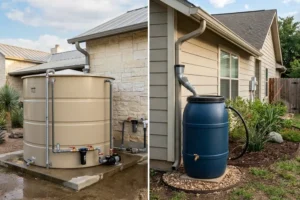
A drainage specialist starts by studying how water moves across your property during and after rain. From there, the team marks high and low points, removes or adds soil, compacts it in layers and checks the final slope. Downspouts are often extended or tied into underground lines so roof water does not undo the new grade. Finally, the surface is restored with sod, mulch or rock so the soil stays in place.
Grading also pairs well with water-friendly landscaping that slows runoff and lets rain soak into the ground. The EPA’s Soak Up the Rain program shares simple ideas homeowners can use alongside a drainage project.
FAQs
How much slope does my yard need for good drainage?
A common target is about a six-inch drop over the first ten feet away from the foundation, then a gentler slope toward a safe outlet.
Can I regrade my yard myself?
Small touch-ups are possible, but larger projects need careful measuring, soil compaction and outlet planning to avoid sending water toward neighbors or back to the house.
Is fall or winter a good time to regrade in Austin?
Yes. Cooler months are a great time to fix drainage before spring storms, and new sod or ground cover has time to settle in.
Get your yard ready for the next Austin storm. Call (512) 721-8564 today.