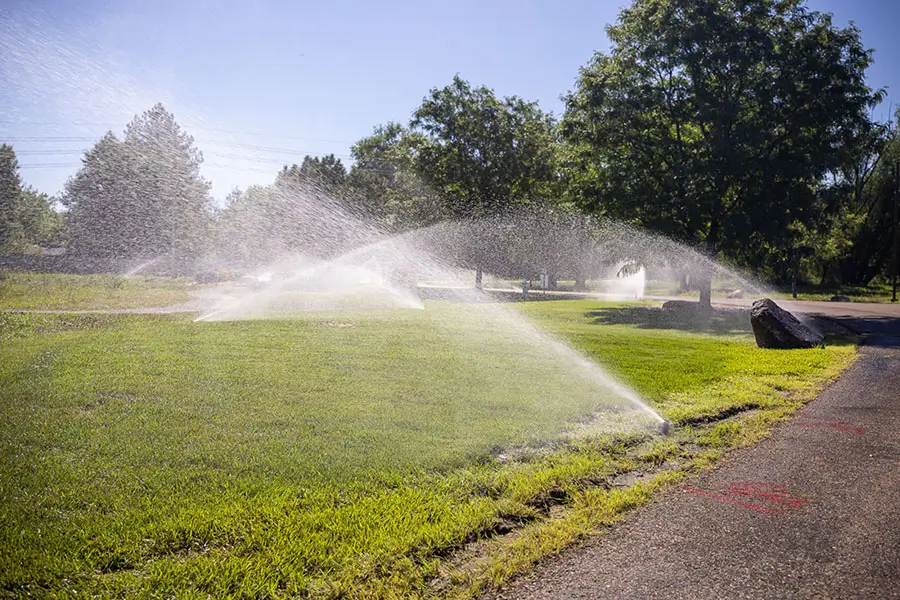
We all know how Texas summer heat can stress your lawn. At Austex Sprinklers, we see it all the time. One patch of grass wilts while another stays green. Many homeowners turn to experienced sprinkler system contractors to understand why this happens and how to fix it.
More often than not, the difference comes down to two things: soil type and sun exposure. Knowing how these affect your irrigation system can save water, keep your grass healthy, and lower your water bills.
How Does Soil Type Affect Watering in Austin Lawns?
Austin soil varies a lot, and it has a big impact on how we set up irrigation zones.
Clay Soils
Dense clay soils hold water longer. That means your sprinkler system does not need to run as long, and water soaks slowly. We often adjust sprinkler head placement in clay soils to reduce runoff.
Clay soils can cause overwatering if you run spray heads too long. Too much water pools on the surface and can wash away soil, making your grass roots shallow.
Compacted soil slows water absorption. We break up compacted areas or improve soil, so water reaches roots efficiently.
Sandy Soils
Sandy soils absorb water quickly but do not hold it long. Your irrigation system needs more frequent watering to keep the grass hydrated during Central Texas’s heat.
Runoff is minimal in sandy soils, so we can deliver water faster without wasting much.
Shallow roots need careful planning. In sandy soils, grass roots may stay near the surface, so run times and watering schedules must match the soil’s fast-draining nature.
How Does Sun Exposure Affect Irrigation Zones?
Sun and shade make a huge difference in water needs.
Sunny slopes require more water.
Grass exposed to full sun loses water faster to evaporation. We just installed zones on a Hill Country slope where spray heads run longer in sunny spots than shaded areas.
Shaded areas hold moisture longer.
We often cut back run times in shaded zones to prevent overwatering and reduce pest problems.
Seasonal adjustments matter in Austin.
During summer heat, sunny zones need more frequent watering, but shaded zones need less. Adjusting your sprinkler system this way saves water and keeps grass healthy.
How Do We Design Efficient Irrigation Zones?
When designing zones, we combine soil type and sun exposure with sprinkler system features.
Type of sprinkler matters
Spray heads work well for clay soils, while drip irrigation delivers water directly in sandy areas.
Slope affects water delivery
We use the cycle and soak methods to prevent runoff on hills.
Smart irrigation systems help homeowners water efficiently
They adjust watering schedules based on rainfall, soil moisture, and seasonal changes in Austin.
Irrigation method affects root growth.
Watering slowly encourages deep roots, while frequent watering of shallow roots can make grass more vulnerable to heat stress.
Local water sources influence choices.
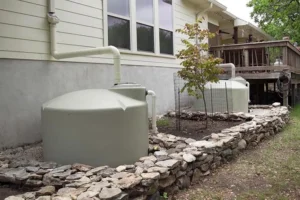
Municipal water, Austin Water, or rain capture systems all factor into how much and how often we run zones.
Common Signs of Poor Zone Design
We often see Austin homeowners with uneven watering.
Uneven watering causes dry patches.
Different soils or sun exposure can make grass in one zone thirsty while another stays wet.
Overwatering increases pests
Standing water in dense clay soils invites fungus and insects.
High water bills indicate inefficiency.
If your sprinkler system runs the same everywhere without considering soil type or sun, you may be wasting municipal water.
Frequently Asked Questions About Sprinkler System Installation
Does soil type affect sprinkler run times?
Yes. Clay soils hold moisture longer and need shorter run times, while sandy soils require more frequent watering.
Can sun exposure change watering schedules?
Yes. Sunny areas lose water faster to evaporation, so sprinkler heads need longer or more frequent runs than shaded areas.
Will adjusting zones save water?
Yes. Matching water delivery to soil type and sun exposure reduces runoff, overwatering, and municipal water waste.
Smart Irrigation Matters in Austin
When it comes to Austin landscapes, soil type and sun exposure matter more than most homeowners realize. We design each irrigation zone based on clay soils, sandy soils, slopes, and sun patterns to make sure the grass gets the right amount of water.
Proper zone planning is also an important part of long-term system performance, which we explain further in our guide on sprinkler system installation and maintenance tips for keeping irrigation systems running efficiently.
That way, lawns survive summer heat, avoid overwatering, and save water for the city. At Austex Sprinklers, we have years of experience helping homeowners deliver water efficiently.
If your lawn is thirsty in one area and soggy in another, or if water bills keep climbing, contact us at (512) 721-8564. We can create an irrigation plan based on local soil, sun exposure, and grass needs. It saves water, protects your lawn, and keeps Austin homeowners smiling.