Austin rain does not play around. One minute the sky is blue, and the next minute your yard looks like a pond with a mailbox. We just finished a job on a hilly street where water kept pooling against the back porch, and it reminded us why drainage matters so much here.
Our soil holds water like a stubborn sponge. Finding the best Austin drainage solution for landscape problems depends on where the water collects, how your yard slopes, and what type of soil you have. Below, we explain the drainage options that can help homeowners prevent standing water and protect their properties.
Why Is Yard Drainage So Hard in Austin?
Our Clay Soil Is Slow to Drink
Most yards around Austin sit on thick clay. Clay is packed so tightly that water struggles to sink. When we dig a test hole after a storm, we often find water sitting there a full day later.
Heavy Storms Come Fast
Central Texas can get a month of rain in one afternoon. The ground cannot soak it up fast enough, so the water runs toward your house, your driveway, or your neighbor. Funny for them, not so funny for you.
What Is a French Drain, and Does It Work?
How a French Drain Works
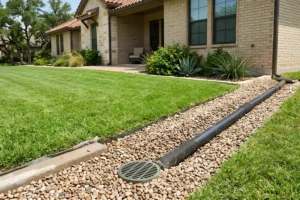
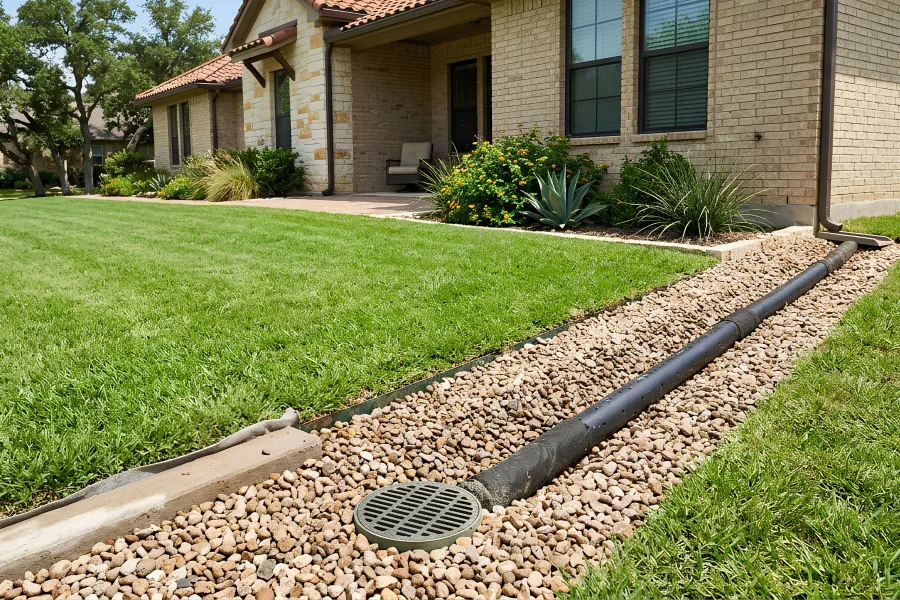
A French drain is a trench filled with gravel and a pipe with small holes in it. Water slips into the gravel, flows into the pipe, and travels away from your home. We just installed one along a back fence, and the soggy patch there dried out after the very next rain.
When We Pick This Drain
We use a French drain when water sits in a low spot or soaks a long stretch of lawn. It works well on flat yards and gentle slopes. It is quiet, hidden under the ground, and easy to live with.
Which Drain Is Best for Standing Water?
Catch Basins and Channel Drains
A catch basin is a box set into the ground that collects water from a low spot. A channel drain is a long, thin grate that catches water across a driveway or patio. We just put in a channel drain at the bottom of a sloped driveway, and the garage floor finally stayed dry.
Dry Wells
A dry well is a big underground tank with gravel around it. It holds water for a while and lets it seep out slowly. We do this when the yard has no good place to send the water.
Can Grading Fix Your Yard?
What Grading Means
Grading means we reshape the ground so water rolls away from your house. A small slope can do a big job. Many homes in Austin settle over the years, and that slope slowly disappears.
When Grading Is Enough
If the problem is mild, grading alone may solve it. If the water is stronger than the slope, we pair grading with a drain. Planning a drainage project also means knowing how much disruption to expect.
Before scheduling the work, it’s helpful to understand what affects the timeline of a residential drainage installation, especially if your yard needs excavation, grading, or multiple drainage components. We always check the yard after a rain before we say what it needs.
What Else Helps Water Move Away?
Small fixes can make a big difference. These are the ones we add most often:
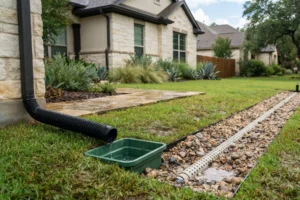
Downspout extensions carry rain from your roof several feet away from the foundation, so water does not pool at the walls.
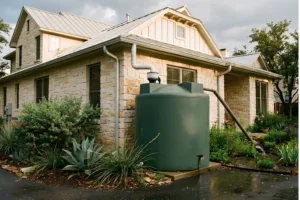
Rain barrels catch roof water and let you use it later on your plants, which saves money on your water bill.
Deep-rooted plants soak up extra water and hold the soil in place, so your yard does not wash away in a storm.
Gravel beds give water a path to follow in tricky spots and keep the mud down along walkways.
Still dealing with runoff after trying smaller fixes? Understanding how yard slopes, French drains, and other methods manage rainwater can help you identify why water keeps collecting and which drainage approach may work for your property.
Frequently Asked Questions About Austin Drainage and Landscaping
1. Is a French drain a good choice for Austin yards?
Yes, it often is. It moves water away from low spots, and it works well even in our thick clay soil.
2. Can bad drainage hurt my home?
Yes, it can. Water that sits near the foundation can cause cracks, damp walls, and mold over time.
3. Can I fix drainage by myself?
Sometimes, but not always. Small jobs like adding a downspout extension are easy, while bigger problems need a trained crew with the right tools.
Let’s Get Your Yard Dry and Happy
Every yard is a little different, but the goal never changes. Get the water out and away from your home. French drains, catch basins, dry wells, and good grading each have a job, and many yards need a mix. We just finished another one this week, and seeing a dry yard after a downpour never gets old.
Ready to say goodbye to soggy grass? Call Austex Sprinklers at (512) 721-8564 or send us a message today. We will look at your yard, tell you what we see, and give you a plan that fits your home and your budget.