In Central Texas, it either does not rain for weeks, or it pours as if the sky tipped over a bucket. After one big storm, many Austin yards turn into small ponds, and the water always seems to pick the worst spot.
We just installed a French drain for a family whose backyard flooded every spring, and they sent us a thank-you note with a picture of their dry patio. Both a French drain and a dry creek bed can solve a drainage problem, but they work in very different ways.
At Austex Sprinklers, our drainage and landscaping services in Austin put both to work, so here is how to pick the right one for your home.
What Is a French Drain and How Does It Work?
A French drain is a drainage solution you cannot see once the work is done. It hides under the ground and does its job quietly.
What Goes Into the Trench?
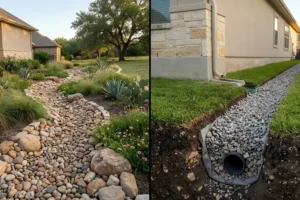
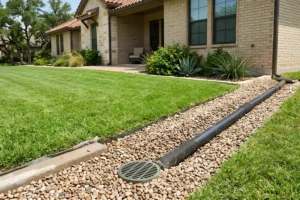
We dig a trench, line it with fabric, and lay a perforated pipe inside. Then we fill the gravel-filled trench to the top and cover it with turf or mulch. Water slips into the gravel, flows into the pipe, and moves away from your house to a safe outlet.
It collects both surface water and subsurface groundwater, which makes it great for soggy lawn areas.
Where Do We Place It?
Placement matters, so we study your slope and soil before we dig. These are the spots where a French drain does the most good.
Near the foundation is a top choice, since standing water there can harm your slab and walls.
Along a patio, sidewalk, or driveway, it stops pooling near the edges so the surface stays usable.
At the base of a slope, it catches runoff before it reaches the lawn.
Behind retaining walls, it lowers water pressure that can push on the wall over time.
What Is a Dry Creek Bed and How Does It Work?
A dry creek bed is a drainage fix you can see, and it can look pretty great. It is an open channel built from gravel and stone that gives rainwater a defined path.
How Do We Build One?
We shape a shallow channel, add gravel, and place larger rocks and a boulder or two along the sides.
The rustic design blends into your existing landscape, and native plants along the edges make it feel like it was always there.
When heavy rain comes, the water flow follows the path and slows down, which cuts erosion.
Where Does It Work Best?
A dry creek bed shines where runoff moves across your yard.
Sloped backyards get a clear path that helps direct water around the house.
Downspouts can empty into the creek bed so rainwater does not concentrate in one spot.
Open outdoor space gains a creative landscaping design feature that also does real work.
Which One Fits Austin Soil Conditions?
Soil conditions vary from street to street in Central Texas. Many yards have clay-heavy soil that holds water, and others have thin soil sitting on rock. Your soil type decides how fast water drains, so one fix does not work everywhere.
A French drain and a dry creek bed are also only two of the yard drainage options that work in Austin, and each one suits a different problem.
Is a French Drain Better for Clay?
Often, yes. The gravel gives trapped water a place to go, and the pipe carries it off. A dry creek bed works better when the main issue is runoff across the surface, not water sinking in.
How Much Upkeep Do They Need?
Both are low-maintenance, but sediment, leaves, and mulch can clog them. A quick check after a big storm keeps the flow moving. If your French drain has a grate, clear it as well.
How Much Do They Cost?
Price depends on length, slope, and what is in the way. A French drain often costs more per foot because of the digging and pipe.
A dry creek bed can cost less, but big stones and plants can add up. DIY projects may look cheaper, but a poor installation can be costly to fix. Installation quality matters more than any other part of the job.
Can I Combine Both for the Best Results?
We just finished a job where a dry creek bed catches runoff from a hill, and a French drain near the foundation handles what soaks in. A properly designed drainage plan can also include grading, a sump pump, a curb outlet, or a tie-in to your irrigation lines.
It can even work with hardscape and lighting upgrades, so the landscaping work looks great at night too. That kind of home improvement also appeals to potential buyers.
For more on planning surface drains and French drains, Clemson Cooperative Extension has a helpful guide to fixing standing water in the yard.
Frequently Asked Questions About Austin Drainage and Landscaping
1. Can a French drain fix standing water near my foundation?
Yes, it is one of the best fixes for that problem. It pulls water away before it reaches your slab.
2. Does a dry creek bed work year-round?
Yes, it handles rain whenever it comes. When the weather is dry, it simply looks like a nice rock feature.
3. Can I install either one myself?
Yes, some homeowners try it, but the slope and outlet must be exactly right. A mistake can send water toward your house, so hiring a pro is safer.
Pick the Fix That Matches Your Yard
If water sits near your foundation or in soggy spots, a French drain is usually the winner. If runoff rushes across a slope, a dry creek bed is a smart, durable, and pretty choice. Many Austin homes do best with both.
Call or contact Austex Sprinklers today at (512) 721-8564, and we will walk your property, check your soil and slope, and build a drainage plan that keeps your home dry and your lawn happy.