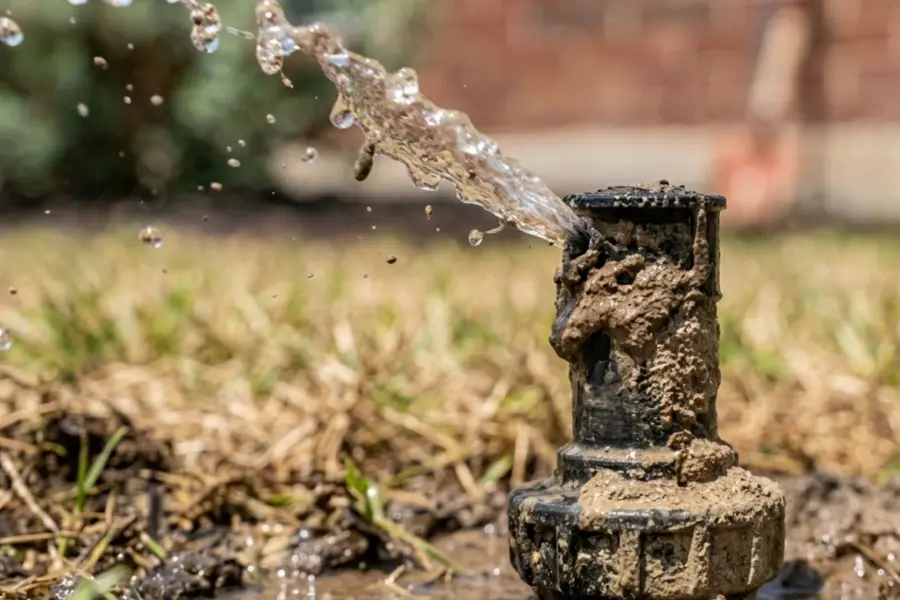
Austin lawns go through a lot. One week, we get dry heat that cooks the grass. Next week, we get heavy rain that packs dirt into sprinkler heads. Our team at Austex Sprinklers just cleaned a system last week in South Austin, where half the spray heads were blocked with mud and tiny rocks after a storm rolled through. The homeowner first called an expert sprinkler repairman because they thought the entire irrigation system had failed, but the fix turned out to be much simpler.
Clogged sprinkler heads are one of the most common problems we see in Austin. Hard water, clay soil, grass clippings, and even ants can block the spray pattern. When that happens, some spots get flooded while others turn brown and dry.
Why Do Sprinkler Heads Get Clogged In Austin?
Austin soil can be rough on sprinkler systems. Our team works on systems every week that are packed with dirt after mowing or heavy rain.
Dirt And Clay Build Up
Austin has thick clay soil that sticks to everything. When sprinkler heads sit too low in the ground, mud can slide right into the nozzle.
Hard Water Problems
Hard water leaves behind white mineral buildup inside the sprinkler head. Over time, the opening gets smaller and the water pressure drops.
Grass Clippings And Debris
After mowing, small grass pieces can land inside open sprinkler heads. We just fixed a sprinkler in Round Rock where grass clippings blocked almost every spray opening.
Clogged Nozzle. A blocked nozzle can make water spray sideways or stop spraying altogether.
Low Water Pressure. Dirty sprinkler heads can lower pressure across the whole zone.
Uneven Watering. Some areas get soaked while other spots stay dry and brown.
How Can You Tell If A Sprinkler Head Is Clogged?
A clogged sprinkler head usually gives clear warning signs. You just have to know what to look for.
Water Sprays In Odd Directions
If water shoots straight up, sprays sideways, or barely comes out, the head may be dirty.
Dry Spots Show Up
Brown patches on the lawn often mean one sprinkler head is not covering the area.
The Sprinkler Head Does Not Pop Up
Dirt can get stuck around the stem and stop the head from rising.
We just worked on a home near Cedar Park where the owner thought the valve had failed. It turned out that thick mud had locked the sprinkler head in place.
How Do We Clean Clogged Sprinkler Heads?
Cleaning sprinkler heads is usually a simple job when caught early.
Turn Off The Water
Always shut the system off before touching the sprinkler head. This keeps dirt from getting pushed deeper inside.
Remove The Nozzle
Most spray heads twist off by hand. Once removed, rinse the nozzle with clean water.
Flush Out Dirt
We like to run the sprinkler zone for a few seconds with the nozzle removed. This pushes dirt and rocks out of the line.
Scrub Mineral Build Up
A small brush or an old toothbrush works well for cleaning hard water deposits.
Put The Head Back Together
After cleaning, screw the nozzle back on and test the spray pattern.
Quick Cleaning. A fast rinse can stop bigger repairs later.
Clean Spray Pattern. Water should fan out evenly without sputtering.
Simple maintenance, cleaning heads a few times each year, helps the whole system last longer.
When Should Sprinkler Heads Be Replaced?
Sometimes, cleaning is not enough. Old sprinkler heads can crack, leak, or stop sealing properly.
Cracked Heads
Austin heat can dry out plastic parts over time. Cracks often lead to leaks around the base.
Worn-Out Seals
Rubber seals wear down after years of use and allow water to leak even when the system is off.
Damaged Spray Patterns
If cleaning does not fix the spray pattern, replacement may be the better choice.
Our crew at Austex Sprinklers just replaced several old heads at a home in North Austin, where the nozzles had worn down from years of hard water buildup. The City of Austin Water Quality Information explains how mineral-rich hard water can affect plumbing fixtures and irrigation components over time.
How Can You Keep Sprinkler Heads Clean Longer?
A little care goes a long way.
Keep Heads Above Soil Level
Heads buried too deep collect dirt fast.
Check The System Monthly
Run each zone and look for weak spray patterns or dry spots.
Clean After Heavy Rain
Storms can wash mud into exposed sprinkler heads.
Watch During Lawn Mowing
Lawn equipment can crack or tilt sprinkler heads without anyone noticing.
We tell homeowners all the time that small sprinkler problems turn into bigger repairs when ignored for too long.
Frequently Asked Questions About Sprinkler Repair
1. Can clogged sprinkler heads waste water?
Yes. A clogged head can spray unevenly or leak water into one spot. That means more water gets used while parts of the lawn still stay dry.
2. Can I clean sprinkler heads myself?
Yes. Many sprinkler heads can be cleaned with basic tools and water. If the problem keeps coming back, the system may need a deeper inspection.
3. Should sprinkler heads be checked every year?
Yes. Regular checks help catch dirt buildup, leaks, and worn parts early. Small fixes usually cost less than major repairs later.
Why Austin Homeowners Call Austex Sprinklers
At Austex Sprinklers, we work on sprinkler systems across Austin every day. Our crew has spent more than 10 years helping local homeowners deal with clogged heads, broken valves, leaks, and water waste.
Many homeowners tell us they did not realize how important choosing the right sprinkler repair professional was until small problems kept turning into repeat repairs and higher water bills. We treat every lawn like it belongs to family because that is how a local company should operate.
We have seen what Texas heat can do to a sprinkler system. One small clog can leave half a lawn dry in just a few days during summer.
If your sprinkler heads are spraying poorly or not popping up correctly, call Austex Sprinklers today at (512) 721-8564. Our team can inspect the system, clean clogged heads, and help keep your lawn healthy all season long.